
Sharif, who has urged the masses to defy a government clampdown and join a nationwide protest, said the "chances of army takeover is absolutely nil".
Pakistan's report on its probe into the dossier provided by India into the Mumbai terror attacks was on Monday examined in Islamabad, by a top level cabinet committee, headed by Pakistan Prime Minister Yousuf Raza Gilani, before being handed over to New Delhi.
The Pakistan Army on Monday issued orders to recall nearly 300 officers deployed with various departments of the government and security agencies.
In a bid to defuse tensions between India and Pakistan, United States on Monday rushed its top Army official to Islamabad, to hold discussions with the country's political leadership. US Joint Chiefs of Staff Admiral Mike Mullen arrived in Islamabad today on an unscheduled visit, second after the November 26 terror strikes in Mumbai that killed more than 180 people. Mullen met Pakistani national security advisor Mehmood Ali Durrani shortly after his arrival.
Congress chief Sonia Gandhi and superstar Shah Rukh Khan have been ranked among the 50 most powerful people in the world by prestigious United States-based magazine 'Newsweek' magazine, in a list topped by President-elect Barack Obama.Pakistan army chief Ashfaq Parvez Kayani, who controls the country's nuclear weapons, is placed 20th on the list of the global 'power elite', at the beginning of 2009 in the magazine's January issue.
In the wake of the Mumbai terror attacks, the Pakistan Army chief has informed the country's leadership that if tensions with India mount further, the military will have to move troops from its restive tribal areas to the eastern borders, ending the war against local militants.
Amid intense US pressure to deliver on the war on terror, the chief of Pakistan's powerful Inter Services Intelligence has been shunted out of Islamabad and replaced by Lieutenant General Ahmad Shuja Pasha, considered close to the reform-minded Army Chief Ashfaq Parvez Kayani.
While officials of the two allies offered few details on Wednesday about what was decided or even discussed at the meeting -- including any new strategies, tactics, weapons or troop deployment -- the star-studded list of participants and an extreme secrecy surrounding the talks, New York Times said the talks underscored how gravely the two nations regarded the growing militant threat.

Lt Gen Haroon Aslam of the Pakistan Army on Thursday resigned a day after he was superseded by his two juniors who were made the new army chief and the chairman joint chief of staff committee.

The increase in violence along the Line of Control in the last few weeks indicates that despite the olive branch offered by Pakistan Prime Minister Nawaz Sharif, hard-line elements in Islamabad are in no mood to become friendly with India.

Pakistan's top civilian and military leadership knew about Osama bin Laden's presence in the country much before the US Navy SEALs killed him in a raid in 2011, the nation's then defence minister has claimed.
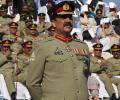
The recent postings and promotions of three-star generals in the Pakistan Army have propelled some of former chief Ashfaq Parvez Kayani's favourites to traditionally important positions

Lt Gen Zubair Hayat appointed as Chairman of Joint Chief of Staff Committee.

New Delhi's decision not to call for a flag meeting underlines its conviction that the military cost will soon become too high for Pakistan.
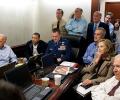
Barack Obama has said that he had ruled out involving Pakistan in the raid on Osama bin Laden's hideout because it was an "open secret" that certain elements inside Pakistan's military, and especially its intelligence services, maintained links to the Taliban and perhaps even al-Qaeda, sometimes using them as strategic assets against Afghanistan and India.

Pakistan's top military commanders have discussed the likely implications of the leaked report of the Abbottabad Commission which has made a series of stinging remarks against the country's powerful security establishment.
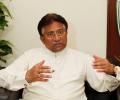
Learning perhaps from the Kargil debacle, Musharraf tried hard to evolve as a statesman in his dealings with India, recalls Rana Banerji, who headed the Pakistan desk at RA&W.
.jpg)
Pakistan's powerful Army Chief Gen Raheel Sharif has described Kashmir as the "jugular vein" of his country, saying the issue should be resolved in accordance with the wishes of Kashmiris and in line with UNSC resolutions for lasting peace in the region.

Eleven people died in sectarian violence in Pakistan's largest city today, taking the overall death toll in two days to 18 as unrest spiralled out of control on the eve of the Islamic holy month of Muharram.
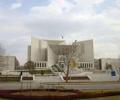
Pakistan's Supreme Court on formally charged Defence Secretary Lt Gen (retired) Asif Yasin Malik for contempt of court after he failed to deliver on an undertaking for holding local body polls in cantonments across the country.
'After General Raheel Sharif took on the Tehrik-e-Taliban Pakistan, some sections of the military establishment may have felt unease as to whether the crackdown could be extended against friendlier 'non-State' actors like the Lashkar-e-Tayiba.'
Pundits in Pakistan and also some western diplomats are predicting that the next army chief will be forced, partly by institutional pressure and partly by circumstances, to indulge in some tough talking with the civilian leadership. How the civil-military equation settles in this sort of a situation is something that will determine the future of Pakistani politics, and also Pakistan's relations with rest of the world, says Sushant Sareen.
'Over the last year, Bajwa has created the environment to support bold moves on India. The ball is in India's court,' a senior Pakistan military officer tells Ajai Shukla.
'The decision has been taken in view of the regional security environment.'
If Imran Khan delays his assent to General Bajwa's recommendations any further, it could imply he is taking stock of possible serious dissent within Pakistan's top army echelons, says Rana Banerji, who headed the Pakistan Desk at the Research and Analysis Wing, India's external intelligence agency.

The US needs to do three things to help the newly elected Nawaz Sharif government in Pakistan, says Stanley A Weiss
With its new army chief Gen Qamar Javed Bajwa set to take charge, Pakistan has asserted that focus will remain on country's eastern border with India, even as the US nudged Islamabad to keep the pledge of not allowing use of its soil for terror attacks against neighbours.
'General Bajwa is believed to consider the internal threats to Pakistan's security as far more serious than the bogey of the Indian threat.' 'This doesn't mean that he is soft on India, only that he is more rational and sensible than his predecessor who had a bit of a chip on his shoulder about India,' points out Pakistan expert Sushant Sareen.
General Bajwa remains in command as army chief and Prime Minister Imran Khan did not play any role in the reshuffle, says Rana Banerji, who headed the Pakistan Desk at the Research and Analysis Wing, India's external intelligence agency.
Through its early days to the 1980s, Pakistan sought to expand its sphere of Islamic influence through Afghanistan to Central Asia and got Pakistani citizens recruited in the Afghan government institutions in the 1990s when the Taliban were power. Now, it is looking eastward through India to Bangladesh and Myanmar to establish an imaginary caliphate.

Gen Sharif had earlier promised to bow out at the end of his term in November this year.
"We want good ties with all neighbours including India and Afghanistan," he told the Senators.
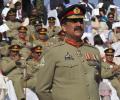
'Already, there is talk of a possible extension for Raheel Sharif in the context of his perceived sterling, but incomplete work in the war against terror, as also the cleansing of crime and extortion networks in Karachi,' says Rana Banerji.
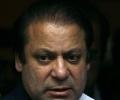
Raking up the Kashmir issue, Prime Minister Nawaz Sharif on Thursday said it is the "main source of tension" in Indo-Pak relations and sought its peaceful resolution to explore new ways to bolster bilateral ties.
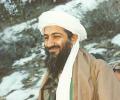
Investigative journalist Seymour Hersh claims that ISI got hold of bin Laden in 2006 after paying bribes to some of the tribal leaders

The verdict was announced after the government submitted a 'new summary' to extend the service of 59-year-old Gen Bajwa.
Reacting to the embarrassing development, Khan chaired an emergency Cabinet meeting and took back the notification to extend services of General Bajwa.
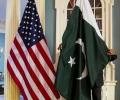
The relations between Pakistan and the US nosedived this January after US President Donald Trump accused Islamabad of giving nothing to Washington but "lies and deceit" and providing "safe haven" to terrorists.
General Qamar Bajwa, his colleagues say, is a firm opponent of extremism and terrorism. He may prove even more forceful in the fight against terrorism than his predecessor, who is credited with launching Operation Zarb-i-Azb, which helped lower the frequency of terrorist attacks.
'It is not difficult for a Pakistan army chief assisted by the deep state to manipulate a situation.' 'Pulwama, Uri and Pathankot, all come to mind,' cautions Lieutenant General Syed Ata Hasnain (retd).
